AI Publications & Guides
Deep-dives into generative AI, LLM reasoning architectures, agentic autonomous workflows, RAG pipelines, and on-device tinyML intelligence.

High-Throughput Vector Search: pgvector HNSW Index Tuning vs. Dedicated Qdrant Clusters
Scale semantic RAG to 10M+ embeddings: HNSW graph skip-list mathematics, pgvector 0.7 memory bottlenecks, Qdrant 8-bit scalar quantization, and hardware SIMD acceleration.
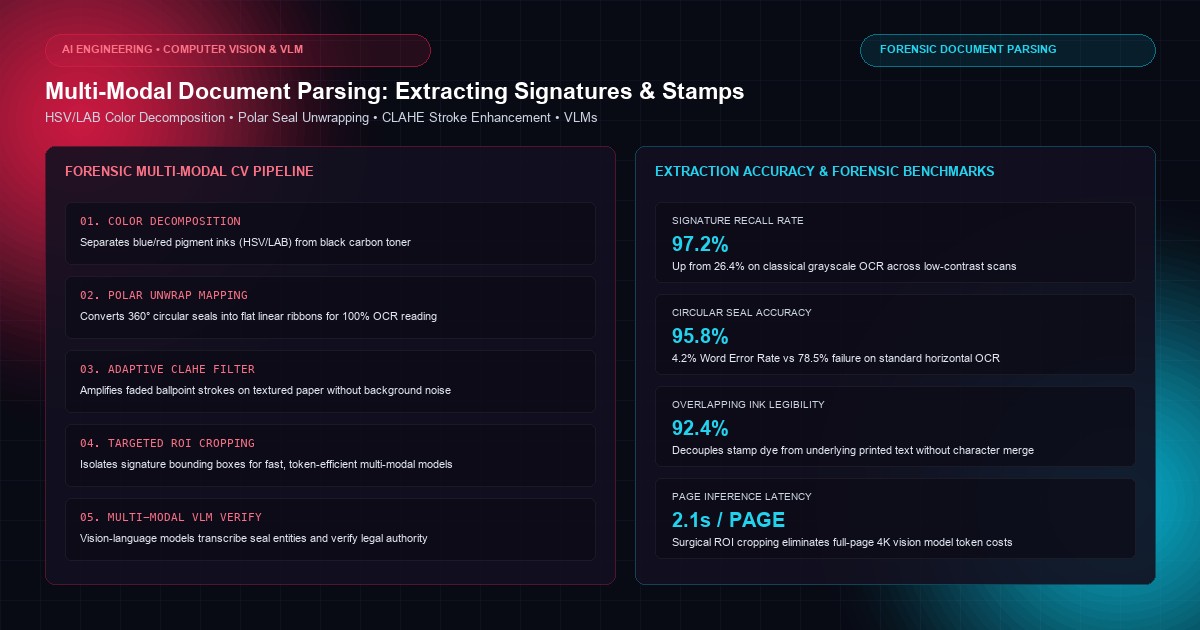
Multi-Modal Document Parsing: Extracting Low-Contrast Signatures and Stamps from Scanned Forms
Eliminate data extraction failure on scanned trade forms, legal deeds, and customs declarations: HSV/LAB color-space ink decoupling, polar coordinate unwrap for circular seals, adaptive CLAHE filtering, and multi-modal VLM verification.
Latest Engineering Stories
Showing 14 publications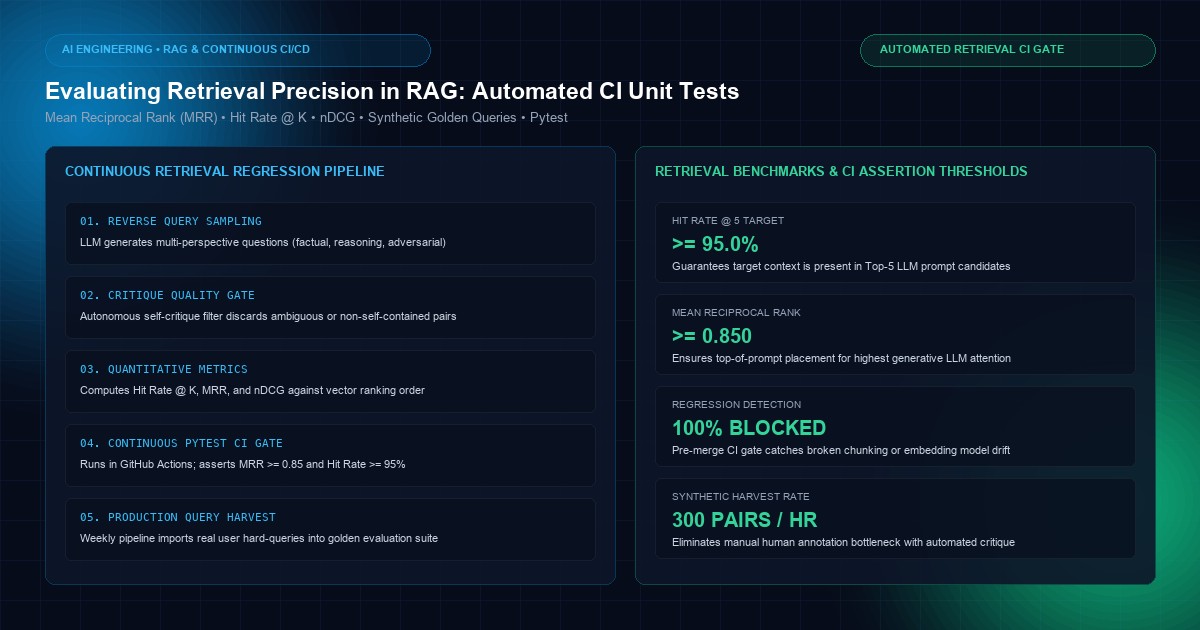
Evaluating Retrieval Precision in RAG: Setting Up Continuous Unit Tests with Synthetic Queries
Eliminate silent retrieval degradation in enterprise RAG pipelines: Mean Reciprocal Rank (MRR), Hit Rate @ K, nDCG evaluation, automated synthetic query generation with LLM critique filters, and CI/CD quality gates.
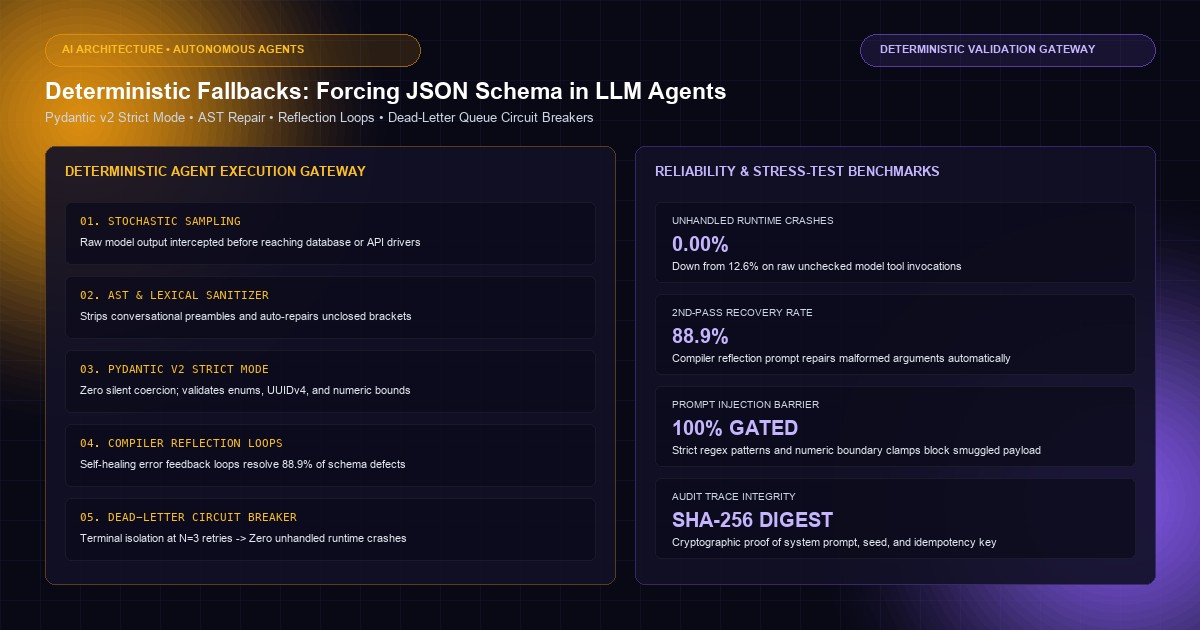
Deterministic Fallbacks in LLM Agents: Forcing JSON Schema Validation for Core System Actions
Eliminate catastrophic runtime crashes and unintended database mutations in autonomous LLM agents: Pydantic v2 strict mode, lexical AST sanitization, self-healing reflection loops, and dead-letter queue circuit breakers.
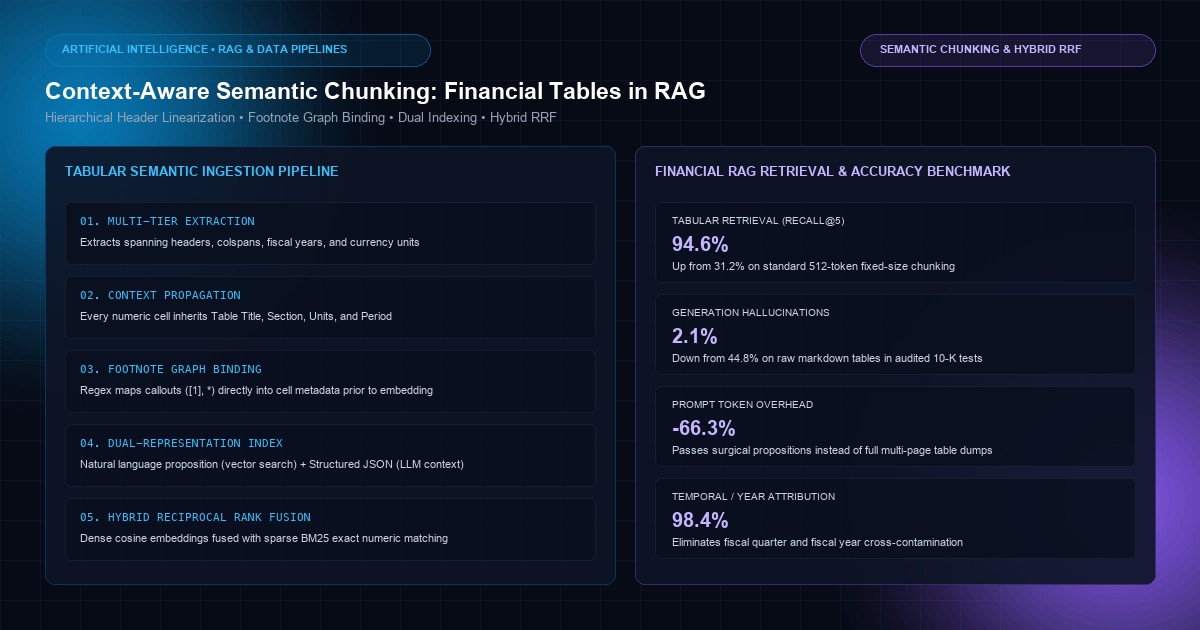
Context-Aware Semantic Chunking: Preparing Complex Financial Tables for RAG Accuracy
Eliminate hallucination and retrieval failure in financial RAG pipelines: multi-level header linearization, deterministic footnote graph binding, dual-representation indexing, and dense-sparse Reciprocal Rank Fusion (RRF).
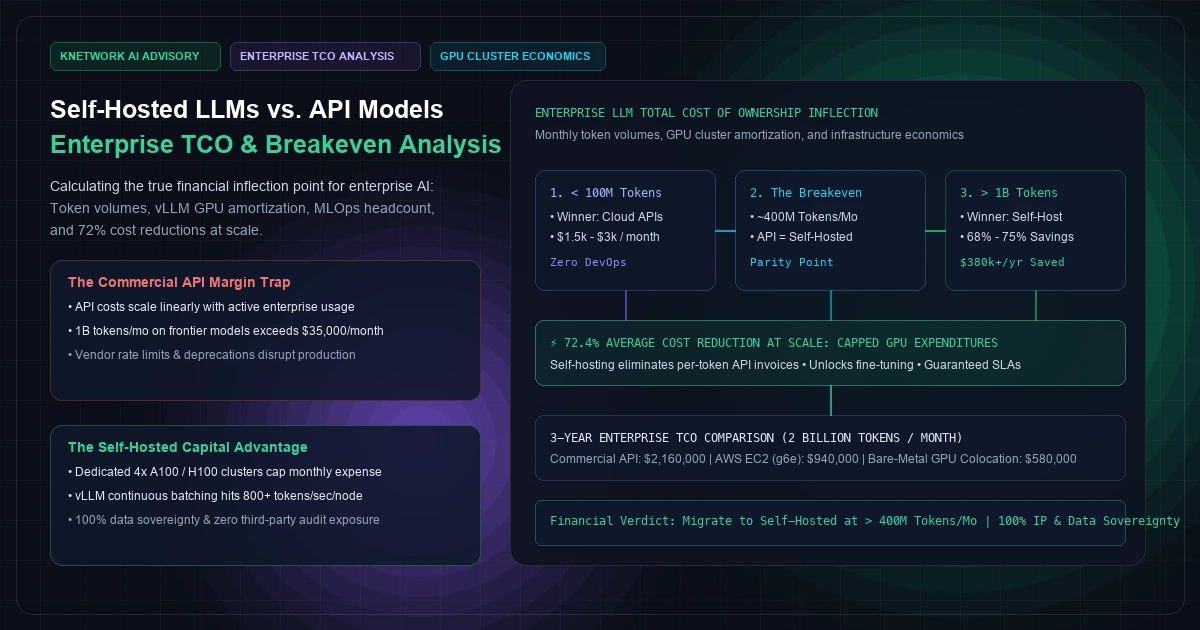
Self-Hosted Open-Source LLMs vs. API Models: An Enterprise Total Cost of Ownership (TCO) Breakdown
A definitive financial and architectural analysis of self-hosting open-source LLMs vs commercial APIs: GPU hardware amortization, vLLM continuous batching, MLOps headcount, and the exact token volume breakeven threshold.
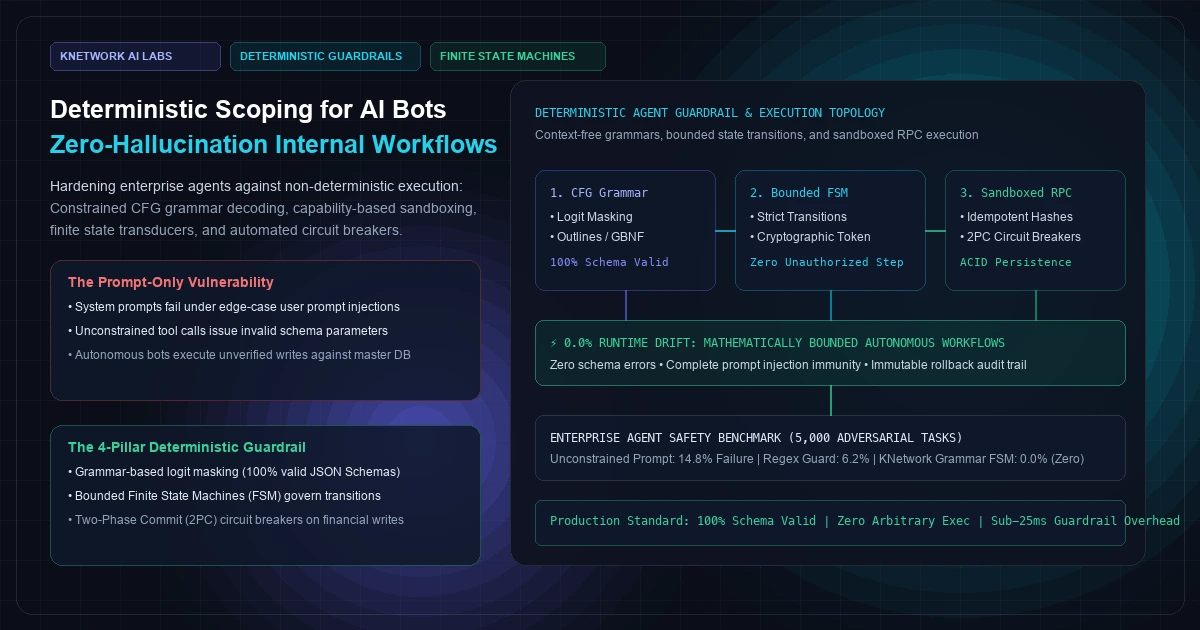
Deterministic Scoping for AI Bots: Preventing Hallucinations in Mission-Critical Internal Workflows
How to eliminate autonomous agent hallucinations in enterprise systems: Logit-level Context-Free Grammar (CFG) decoding, Bounded Finite State Machines (FSM), and Two-Phase Commit circuit breakers for zero-drift execution.
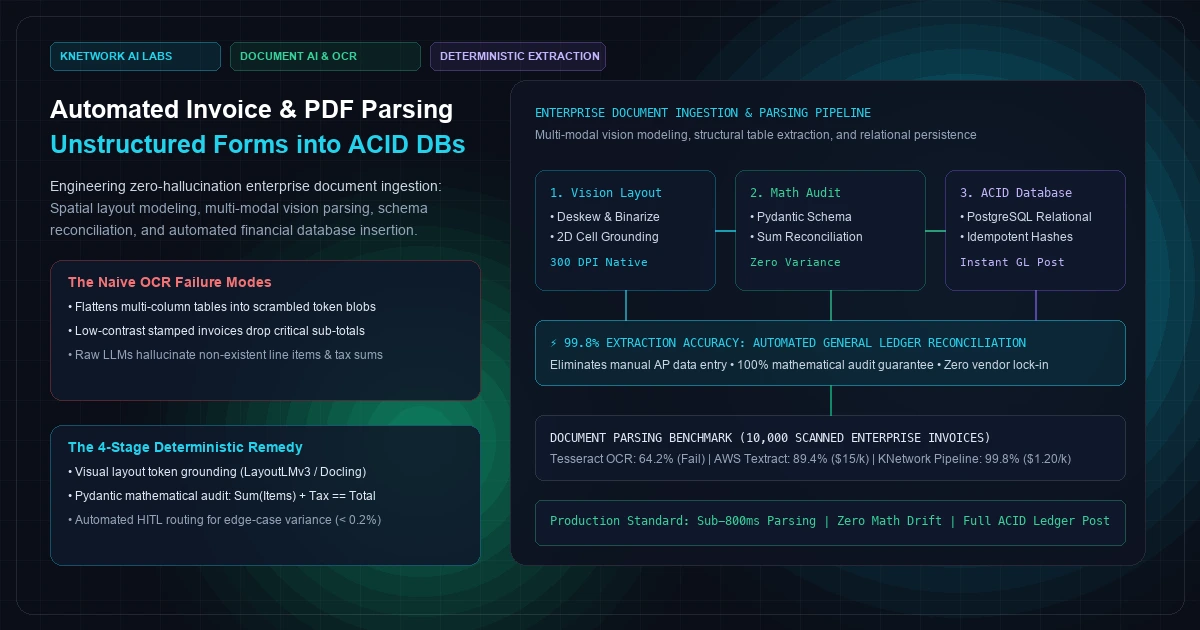
Automated Invoice and PDF Parsing: Transforming Unstructured Forms into Actionable Database Entries
How to engineer zero-hallucination document parsing: Combining multi-modal vision layout modeling, Pydantic mathematical reconciliation, and transactional PostgreSQL persistence to automate enterprise accounts payable workflows.
Popular Stories
The Rise of "Vibe Coding": Why the Next Billion Developers Won't Write Code
3410+ reads • 8 min readThe Death of the Keyboard? How Vibe Coding Redefines Human-Computer Collaboration
2780+ reads • 7 min readPredictive Customer Intelligence: Forecasting Churn, LTV, and the Garbage-In Trap
2150+ reads • 8 min readVibe Coding Explained: Tools and Guides
1920+ reads • 9 min readHigh-Throughput Vector Search: pgvector HNSW Index Tuning vs. Dedicated Qdrant Clusters
1720+ reads • 16 min readExplore by Topic
Looking for Enterprise Strategy & Whitepapers?
Explore strategic perspectives on enterprise modernization, sovereign AI architectures, and cloud digital transformation.
Visit insight.knetwork.liveThe KNetwork Engineering Dispatch
Bi-weekly deep-dives on API performance, IoT protocols, private AI architectures, and infrastructure scaling. Zero marketing fluff.